I Helped An Airbnb Host Get 86% Occupancy Without Lowering Prices
Watch on YouTube:
A client came to me with a goal: He wanted to raise his average daily rate.
But his calendar looked light, and he was starting to panic. His first instinct was to drop the price. Most hosts do that when they get nervous.
I told him to pause.
Getting booked doesn’t mean you have to go cheaper. It means you need a smarter pricing strategy.
We made a few key changes. We didn’t lower the base price. We didn’t offer discounts or throw in freebies. We just priced the property in a way that matched how guests actually book.
And it worked.
Most Hosts Get Stuck on One Number
The mistake most people make is trying to hit the same rate all year long. They pick a number and want to stick to it every night. That’s not how the market works.
You don’t make your money by holding steady. You make it by knowing when to lean in and when to pull back.
If it’s off-season, you need to be competitive. You’re not going to win if you’re sitting above the market while demand is low. But when the calendar flips and people start booking fast, you need to be ready to push higher.
The average you’re aiming for comes from both ends. Some nights will be lower. Some will be way higher. That’s how the numbers balance out.
What We Changed in the Pricing
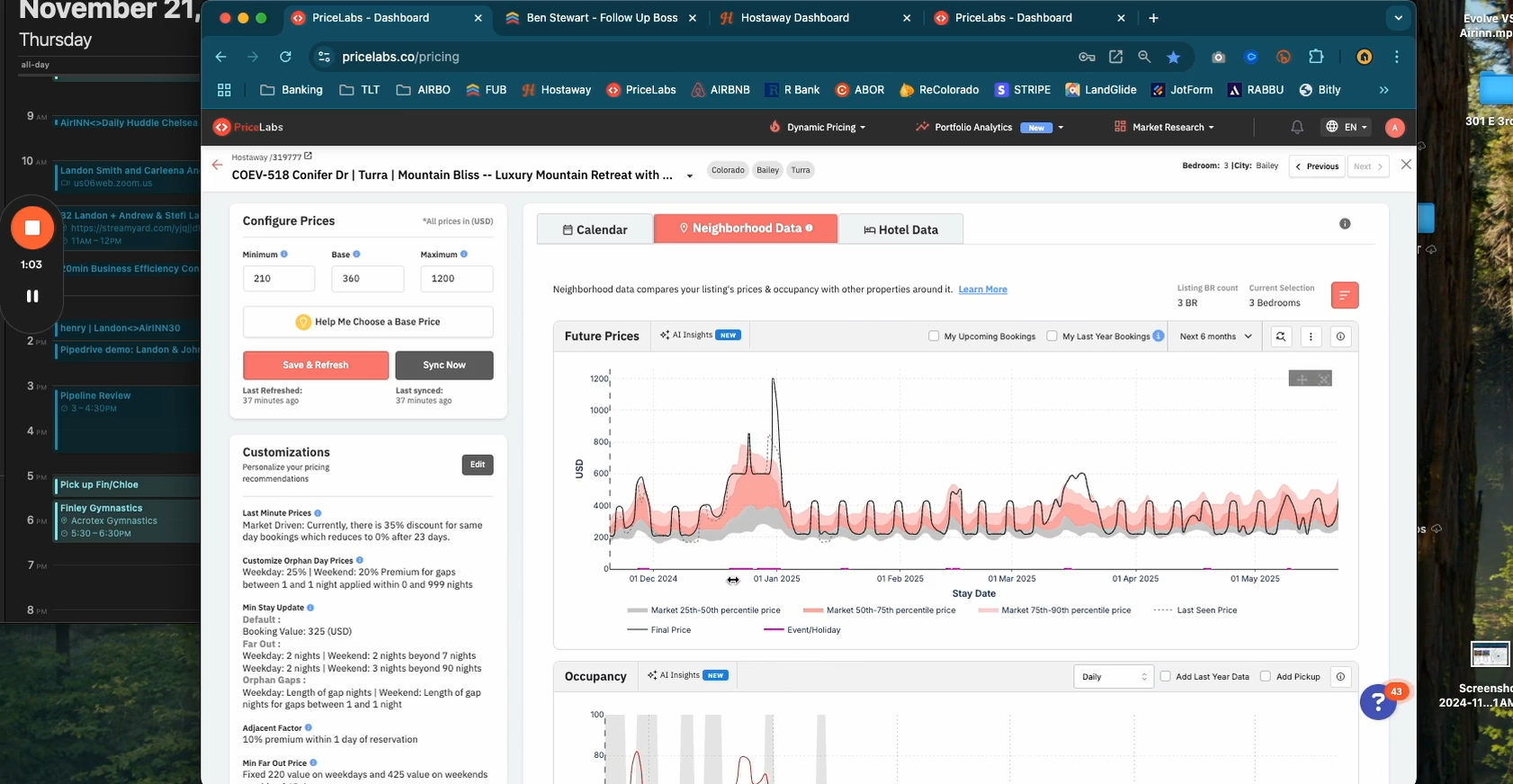
For this client, we kept his base price high. He had a three-bedroom place. The tool he was using suggested a base around $323. We set it at $360.
We didn’t leave it there all the time. That number became the baseline we worked from. The system flexed around it. When demand dropped, the algorithm adjusted. When demand spiked, it went above that.
We added a cap so it wouldn’t go too far up and scare people off. But within that range, the pricing engine did its job.
This approach works best when you trust the data and stop guessing. That’s exactly what we did.
The Results: More Nights, More Revenue, Higher Rate
Let’s look at the numbers.
Here’s how Jeff’s property performed compared to the market:
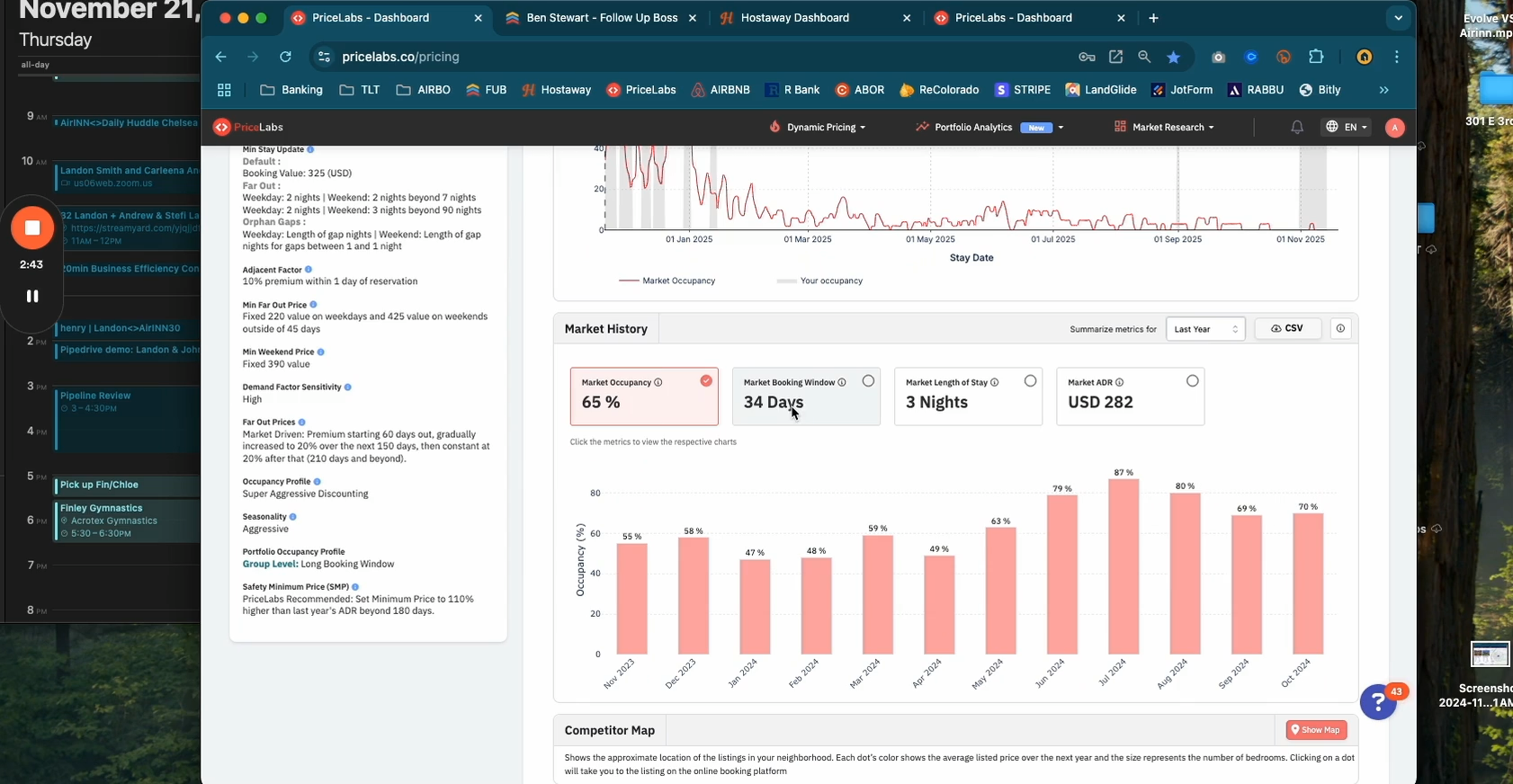
86% occupancy in the next 7 days
Market average: 47%70% occupancy over the next 30 days
Market average: 39%45% occupancy for the next 60 days
Market average: 38%
And his average daily rate?
$432 per night over the next 60 days.
The market average was only $282.
Let that sink in. More nights booked. Higher rate. Better revenue.
His revenue for the next 30 days was $8,490. A similar nearby listing came in at $6,212.
That’s an extra $2,278 just from one month. No gimmicks. No discounts. Just a better strategy.
Peak Season Carries the Weight
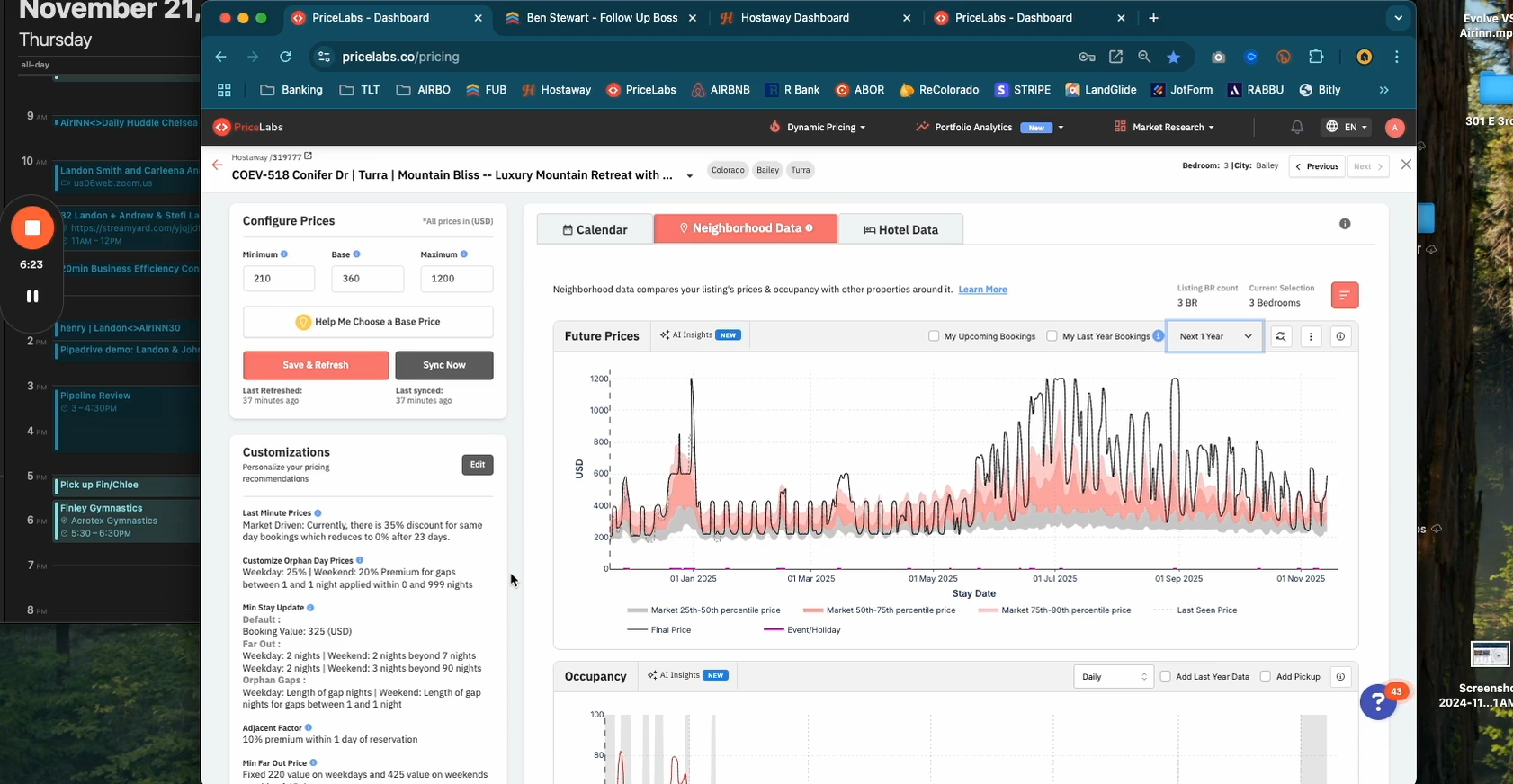
This isn’t about squeezing every dollar out of slow season. The real opportunity is in your peak months.
I’ll give you an example from one of my own listings. It’s a one-bedroom.
During summer:
92% occupancy
$340 average daily rate
$33,000 in 3 months
That’s $11,000 per month from one unit.
I didn’t set that price all year. I let summer do what summer does. The rest of the year? I kept things competitive. That’s how you win without chasing every booking.
How You Can Do the Same
If you want to book more nights without lowering your price, here’s what I recommend:
1. Set a base price slightly above the 75th percentile
Use a pricing tool that gives you real market data. You don’t want to be at the bottom. You also don’t want to price yourself out. Look at comps in your area and set your floor just above the mid-range.
2. Let pricing move with demand
Install a smart pricing tool. Let it lower your price during slow weeks. Let it raise it during busy weekends and holidays. Don’t try to outthink the algorithm. Just give it the right guardrails.
3. Cap your max price
If you don’t add a ceiling, some tools will send you into the stratosphere. That backfires. Keep it realistic.
4. Track your RevPAR
That’s your revenue per available night. Don’t just look at how many nights you booked. Look at how much you earned on the ones you filled.
5. Stop watching what your neighbors are charging
Most hosts don’t know what they’re doing. Focus on your data. Your demand. Your revenue. That’s what matters.
Final Thoughts
Getting booked isn’t about lowering your price. It’s about knowing where your price fits in the bigger picture.
When you work with the market, not against it, you’ll fill your calendar without leaving money behind. That’s exactly what we did for Jeff.
He didn’t panic. He didn’t slash his rate. He just gave his property the strategy it needed.
Now his calendar is full. His rates are high. And his revenue speaks for itself.
Quick Recap
Your base price sets the floor, not the outcome
Use data to guide your pricing decisions
Flex in low demand... push hard in peak months
Revenue wins. Not just bookings
Smart pricing beats low pricing every time
BONUS: Here's a FREE resources that I think you'll love...
If you're like most STR owners, then you're are always looking for ways to make your property stand out & create a 5-star experience.
Well, I've got something that'll help!
I put together this handy "Property Make Ready Checklist" that covers all the essentials (and some fun extras) you need to stock your rental.
And guess what? I'm giving it away for free! All you gotta do is sign up for my email list, and boom – the PDF is yours.
Once you're on the list, I'll also send you some proven tips and tricks to help you crush it in the short-term rental game. We're all in this together, right?
So, what are you waiting for? Sign up now and snag your free checklist! 👇
Written by
Landon Smith
As a "real estate guy" and musician, I love blending the worlds of music and real estate, embodying my "job" as a musician, realtor, investor, builder, and developer.
My passion lies in empowering others to achieve their real estate aspirations, guiding them towards the freedom and enjoyment life has to offer...whatever that looks like for them. As a devoted father and husband, faith, family, and freedom are the core values of my endeavors.
I find a unique harmony between the creative freedom in both my musical and real estate, drawing parallels between composing a song, developing a piece of land, or designing a house. My purpose is more than a transaction; it's about helping others create their vision and empowering them to execute to get the most out of their life.
👇 Want to connect?
Strike The Right Chord In Real Estate With A Unique Blend Of Artistic Vision & Investment Strategy
AirINN.realestate
Whether you’re making your first investment or scaling your portfolio, I'm here to craft a strategy that resonates with your ambitions. Let’s navigate your real estate journey together.
AirINN.host
Experience the comfort and style of our curated properties. Book your perfect getaway or business accommodation with ease and confidence.
AirINN.academy
Join Landon in the AirINN Academy, where knowledge meets action. Unlock insider real estate insights and personal growth strategies to elevate your investing game.
*Coming Soon